
The Hidden Economics of Community Lacrosse
Scoreboard Without Hardware: The Hidden Economics of Youth Lacrosse Games
How a web-based scoreboard without hardware can help fund your community sports program.
According to the Aspen Institute’s Project Play parent survey, families now spend over $1,000 per year on a child’s primary sport, contributing to more than $40 billion annually in youth sports spending nationwide.
And the investment isn’t just financial.
Parents spend more than three hours every day their child has a game or practice participating in youth sports activities — driving to fields, watching games, and supporting their kids.
That time and attention shows up every weekend at local fields across the country.
Youth Sports Families are Already Invested
Walk up to almost any youth lacrosse field on a Saturday morning and you’ll see the same setup.
Two teams warming up.
Parents unfolding chairs along the sideline.
And somewhere near midfield, a volunteer sitting beside a small flip scoreboard and game clock.
Every time a goal is scored, the volunteer flips the number cards.
Every few minutes, parents glance over to check the clock.
How much time is left?
What’s the score?
For decades, that small scoreboard and clock have been the center of attention at youth games.
But they’ve always done only one thing:
Show the score.
The Flip Scoreboard Every Field Uses
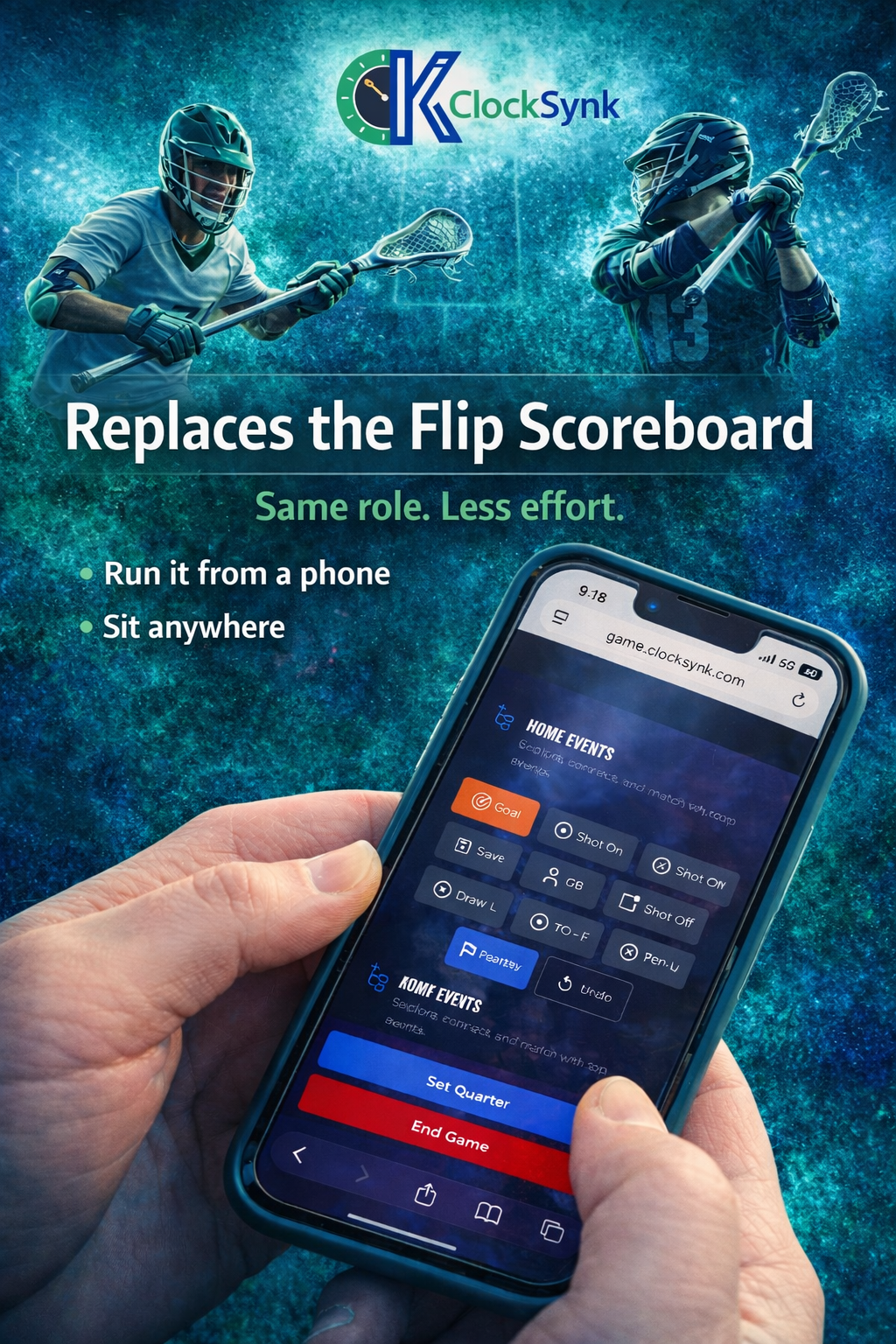
At some youth fields today, the traditional flip scoreboard is starting to evolve.
Instead of manually flipping cards, a volunteer can run the game clock and score from a phone or tablet.
Parents watching the game can open the same scoreboard on their phones and follow the game live.
The clock updates in real time.
The score changes instantly.
Everyone at the field — and even family members at home — can see the same live scoreboard.
Once the scoreboard becomes digital, something interesting happens.
It becomes possible for local businesses that support the league to appear alongside the scoreboard during the game.
Not as intrusive ads.
But as simple sponsor placements — the same way businesses already support teams with banners or jersey logos.
Suddenly, the scoreboard becomes more than a clock.
It becomes a community platform connected to the game itself.
Youth Sports Already Bring Communities Together

Youth sports are not small activities anymore.
According to the Aspen Institute’s State of Play report, youth sports participation represents a massive ecosystem that brings families and communities together across the United States.
On any given weekend, fields are filled with parents, grandparents, and siblings watching games together.
Thirty… sometimes fifty people may be watching a single youth game at the same time.
For nearly an hour, everyone is focused on the same things:
the field
the score
the game clock
That kind of sustained attention is rare in modern media.
Live sports consistently produce the highest sustained viewer engagement, according to Nielsen research.
Professional leagues understand this well.
Their scoreboards, broadcasts, and digital platforms are designed around that attention.
Youth sports fields already have that engagement.
They’ve just never had a way to use it.
How a Web-Based Scoreboard Creates Sponsorship Opportunities
Community leagues have always relied on local sponsors.
Businesses support youth programs through:
jersey sponsorships
banners along the fence
tournament programs
donations
And they do it for a simple reason:
They want to support the kids in their community.
Youth tournaments also create real economic activity.
Sports tourism research shows youth events can generate millions of dollars in local economic impact through hotels, restaurants, and travel spending.
But those studies measure travel spending.
They rarely measure something happening right at the field--the attention during the games themselves.
What Happens When the Scoreboard Goes Digital?
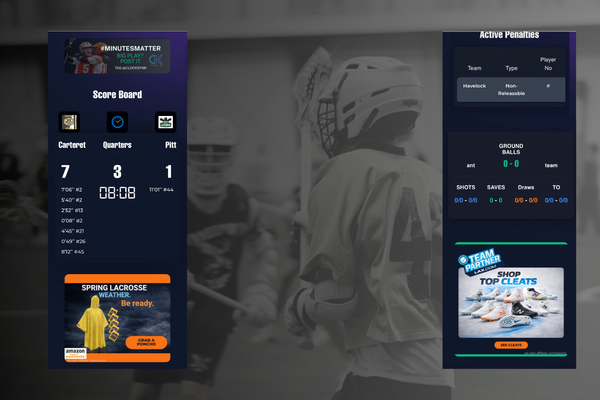
Once the game clock and scoreboard move from a flip board to a digital platform, something new becomes possible.
Sponsors can support:
a specific field
a weekend tournament
a league season
a championship game
Instead of one banner hanging on a fence all year, businesses can support youth sports in ways that connect directly to the games families are watching.
For leagues, that support can help fund things every board struggles to afford:
better equipment
field improvements
scholarships for players
lower registration costs
And that matters more than ever.
Research shows 58% of parents say youth sports costs are becoming a financial strain for families.
Final Whistle: Turning Game Minutes Into Revenue for Youth Sports

For decades, youth sports leagues have relied on the same simple setup:
A volunteer.
A folding chair.
A flip scoreboard and game clock.
That system has served the game well.
But as communities look for new ways to support youth programs, the scoreboard itself may hold more potential than we ever realized.
Every game already brings families together.
Every game already creates attention.
The question is whether communities choose to use that moment to help sustain the programs that make youth sports possible.


